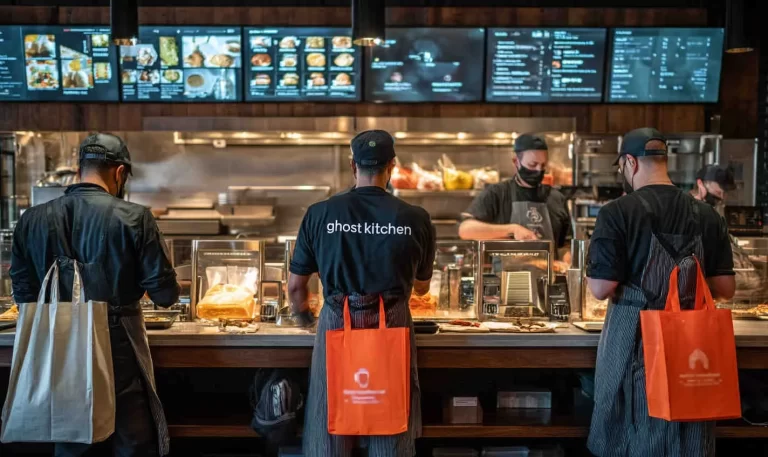

In this industry, ‘hoping’ you made money at the end of the shift is a recipe for a closing sale. To run a tight ship, you need to find your break-even point for restaurants, that magic number where your sales finally clear your overhead, and you start actually keeping the cash you bring in. Think of this as your financial line check; if you don’t know your numbers, you’re just cooking in the dark.
Restaurants must be aware of the break-even point in order to assess the efficiency of their operations and financial stability. We go further into break-even analysis in this extensive tutorial, offering a methodical approach and real-world examples that are specifically adapted for the restaurant business.
What is Break-Even Point?
When total costs and sales revenue are equal, there is no profit or loss and this is known as the break-even point. Restaurants need to know this number in order to set prices, create sales goals, and assess profitability.
Key Components of Break-Even Analysis
1. Fixed Costs
Fixed costs don’t change based on the volume of sales. These include leases for equipment, salary, insurance, and rent in restaurants. For exact break-even calculations, fixed costs must be identified and carefully calculated.
Operator Note: Think of your rent like that one regular who camps out at a four-top during Friday rush; it’s not moving whether you’re busy or dead. It’s a fixed cost, and it’s the first hurdle your margin has to jump.
2. Variable Costs
Variable costs vary in proportion to sales volume. Ingredients, packaging, utilities, and hourly wages are a few examples in restaurants. Accurately calculating the break-even point requires an understanding of and commitment to managing variable costs.
Operator Note: Variable costs are the “wild cards.” One week you’re fine, the next week a spike in poultry prices from suppliers like Sysco can throw your entire P&L out of whack. According to 2026 data from the National Restaurant Association, managing these shifting margins is the #1 differentiator for survival this year.
3. Contribution Margin
The total difference between total sales revenue and total variable costs is known as the contribution margin. It shows the percentage of income that can be used to pay for fixed costs and make a profit. Better profitability potential is indicated by a higher contribution margin.
4. Break-Even Formula
The break-even point can be calculated using the formula:
- Break-Even Point = Total Fixed Costs/Contribution Margin
This formula provides a clear quantitative measure of the sales volume needed to cover all costs.
Steps to Calculate Break-Even Point for Restaurants
Step 1: Identify Fixed Costs
Make a detailed record of every fixed cost you incur on a monthly or yearly basis, such as rent, insurance, salaries, and equipment leases.
Step 2: Determine Variable Costs per Unit
Determine the average variable cost per served meal or supplied service. Variable costs include ingredients, packaging, utilities, and hourly wages.
Step 3: Calculate Contribution Margin
To calculate the contribution margin per unit, subtract the average variable cost per meal from the average selling price per meal.
Step 4: Apply the Break-Even Formula
Divide total fixed costs by the contribution margin per unit to find the break-even point in sales units or revenue.
Practical Example
Consider a craft brewery operating across three locations. Here are their financial specifics per location:
- Total Fixed Costs per month at each location: $15,000
- Average Variable Cost per brewed batch: $8
- Average Selling Price per pint: $20
Calculating the Contribution Margin:
- Contribution Margin per pint = $20 (Selling Price) – $8 (Variable Cost) = $12
Determining the Break-Even Point for Each Location:
- Break-Even Point (in pints) = $15,000 (Fixed Costs per location) / $12 (Contribution Margin per pint) = 1,250 pints
This means each location of the brewery needs to sell 1,250 pints monthly to cover both fixed and variable costs and achieve the break-even point.
Importance of Break-Even Analysis for Restaurants
Break-even analysis offers critical insights and benefits for restaurants:
- Financial Planning: Aids in setting realistic revenue targets and budgeting effectively.
- Menu pricing: Provides direction for choosing price strategies to ensure profitability.
- Cost Control: Identifies opportunities to reduce variable costs and improve margins.
- Business Expansion: Determines if it would be feasible to open new locations or expand operations.
Major hospitality groups like Lettuce Entertain You Enterprises emphasize high-frequency financial reporting to ensure their multi-concept portfolios remain agile against 2026’s rising overhead. Knowing your break-even point is key to financial success. For related insights, explore Measuring Cost of Goods Sold (COGS) in Restaurants for Maximum Profitability.
Conclusion
Mastering break-even analysis is essential for restaurant owners and managers aiming for sustainable growth and profitability. By gaining insights into fixed and variable costs, leveraging contribution margins, and applying the break-even formula effectively, restaurants can navigate financial challenges and thrive in a competitive market. For tailored support, Over Easy Office (OEO) provides specialized accounting and bookkeeping services to the hospitality industry. Contact us today and add a support team for reliable financial data to empower informed strategic decision-making.